ON THE FARM
I’ve been making all manner of gifty items this week, including alpaca fiber dryer balls and our new Mudhoney soap with local clay and local honey.
I make hot process soap in the crock pot. It takes an hour. Here’s the recipe I use:
(***If you’ve never made soap before and are about to try, please check out this detailed article .)
2.4 oz castor oil
7.6 oz olive oil
20 oz coconut oil
9 oz distilled water
4.8 oz lye
+
1 TBSP local clay
1 TBSP local honey
 Clay and honey hydrate and soothe the skin.
 The Process
1. Combine oils in crockpot on low. Wearing gloves and eye protection, measure water and lye into separate containers. Step outside and in a heat safe container, slowly ADD THE LYE TO THE WATER and stir to dissolve. Do not do it the other way around. It can be dangerous. Note: This step produces heat and a chemical reaction. Don’t do it inside the house and don’t use aluminum. Clean up any spills immediately. If you’ve not worked with lye before please read this how to before you begin.
2. Add lye/water mixture to crockpot and stir to blend. Cover and set timer for 50 minutes.
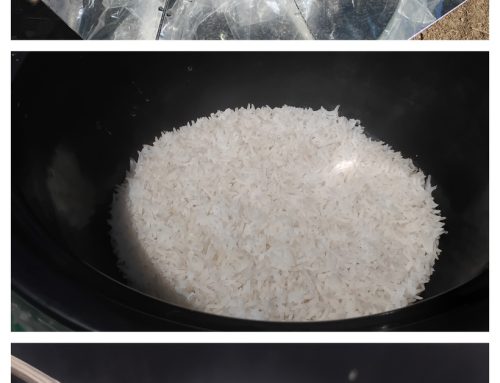
3. After 50 minutes the soap should look grainy all the way to the center of the pot. (See above.) Pull it from the heat, give it a quick stir and pour it into your molds. Remove from molds when cooled and let it set for at least 24 hours before using.
Rod’s House
This week we served up drop biscuits with goulash and pumpkin muffins with cream cheese sorghum frosting. We used our tomatoes, Wren’s potatoes and pumpkin from the composting crew. I forgot to take pics, but it happened, I swear.
LOCAL
Yakima Immigrant Response Network
“We can address the rising fear in our community by getting involved personally in supporting our immigrant neighbors. Families belong together and need to feel safe. Concerned community members can play a vital role in building networks of support and protection.
Here’s what YOU can do.”
(Source: Yakima Immigrant Response Network)
War Cry Podcast
“An Indigenous-led podcast focusing on Missing and Murdered Indigenous Women, Men, and LGBTQ2S+ (MMIW/MMIP) issues, especially in the Pacific Northwest, hosted by Yakama members Emily Washines, Robyn Pebeahsy, and others, featuring local stories like those from the Yakima Valley and the historical Yakama War, connecting past injustices with current crises and offering support for families seeking answers. They host live events, like those at Heritage University, and cover topics from historical trauma to current advocacy, making it a significant local voice for Indigenous justice and awareness. ”
(Source: War Cry Podcast)
WASHINGTON STATE
150-year-old seed company in Washington helps reforest in the face of climate change
“The company Silvaseed is a key player in the region. Based southeast of Olympia in Roy, Washington, Silvaseed collects, cleans, catalogues and preserves seeds. It also raises millions of seedlings every year in its greenhouses and fields. Customers include private timber companies, public land managers and tribal nations.”
(Source: Oregon Public Broadcasting, Dec 13)
‘Food is my tool, community is my purpose’:
Meet the Tacoma chef feeding hundreds for free
“Local food supports local people. When I buy from local farmers, they stay in business. When we teach kids to grow food, they learn self-reliance. When we feed the community, we’re literally serving Tacoma on Tacoma ingredients. It’s all connected.” —Shawn Tibbitts
(Source: MyNorthwest, Dec. 16)
NATIONAL & BEYOND
To Claim Our Rights, First We Must Know Them
“Human rights were forged for moments of uncertainty like the one we face today. It is our shared responsibility to defend them and build on what we have achieved. Human rights education is a powerful tool for shaping the future, so take the first step by learning about your rights, explore courses from Amnesty’s Human Rights Academy in over 20 languages, get involved with a local organization, and speak up or act when someone’s rights are being violated.”
(Source: Amnesty International, Dec. 18)
From Living Buildings to An Ecological Civilization
“Imagine communities designed as ecosystems: safe, efficient, affordable housing that facilitates sharing. Food produced by regenerative local farms. Clinics, schools, and cultural spaces as anchors of care and learning. Forests, wetlands, and green corridors restored to provide shade, clean air, flood protection, and beauty. In such communities, elders offer wisdom, youth bring creativity, and all share responsibility for stewardship.
By melding with the global movement for an Ecological Civilization, the Living Building Challenge can extend far beyond architecture. It can become a catalyst for systemic redesign of infrastructure, economics, and governance.
We stand at a turning point. The task before us is not only technical—it is moral.
We must reimagine infrastructure as the architecture of community, sufficiency, and Earth care.” –David Korten
(Source: DavidKorten.org. Sept 20)
Standing Up for Refugee Rights: Justice as a Lifeline
“71% of the world’s refugees and other people in need of international protection are hosted in low- and middle-income countries, that disproportionately share the burden of responding to these crises. If asylum systems are not in place, if justice systems and communities are unprepared to respond, rights cannot be protected. “
(Source: United Nations Development Programme, Dec 18)
Solstice Season: Abundance & Connection
“In honor of the Winter Solstice happening this coming weekend on December 21st at 10:03 AM Pacific, we celebrate land and place-based cultivation from a foundation of cultural and spiritual care leading the way. We’re joined in this by Dr. Don Hankins, Professor of Geography and Planning at California State University, Chico.
Of Miwok ancestry, Don, for decades now, has focused on applied research of indigenous stewardship practices as a “keystone process to aid in conservation and management of resources”, particularly around the cultural use of fire and and conservation of water. Don has been involved in land management and conservation local organizations and agencies as well as federal and tribal governments.”
(Source: Cultivating Place, Dec 18)
Living Permaculture | Katrina Mendrey
“Vanessa Harmony interviews Katrina Mendrey, a superhero in the realm of North American fruit growing and heritage orchards. Katrina previously oversaw the Montana Heritage Orchard Program and was a founding member of the Heritage Orchard Conference. They discuss Katrina’s career path, the value of heritage fruit varieties, fruit tree propagation, and uncommon fruits to try growing in the West.”
(Source: KNDK, Dec 15)
From Seeds to Plants: A Plant Conservation Pipeline
“Plant conservation comes in many forms. Today we explore a plant conservation pipeline that starts with propagation and continues through to reintroducing rare plants back into the wild. Conservation Collections Manager for the Desert Botanical Gardens Steve Blackwell takes us behind the scenes of the Garden’s living collection, where rare, threatened, and endangered species are collected, propagated, and carefully curated for both research and recovery efforts.”
(Source: In Defense of Plants, Dec. 14)
Interplanting Vs Companion Planting Vs Undersowing + How To Clean Seed
“We cover: how we clean our seeds, Interplant-a-sow-a-companion (not sure if that will even make sense when we get there), and the intersection of gardening, kids, and sports.“
(Source: Growers Daily Podcast, Dec 18.)
Building Social Wealth Through Mutual Aid
“As market economies become more expensive and predatory, Stephanie Rearick is showing that it’s entirely possible to meet people’s needs effectively through care and cooperation, through a kind of alternative social economy.”
(Source: PopularResistance.org, Dec 6)
Hope you’re staying warm and dry out there and that Santa has received your seed list.
XO, Maria